
 Seth Hansen
Can Solar Panels Handle the Toughest Road Conditions? A Look at Durability in Commercial Trucking
 Seth Hansen : April 7, 2025
Originally published 9-2-2024
This blog post was co-created with AI.
In commercial trucking, reliability keeps operations moving. Liftgates are essential for loading and unloading cargo efficiently, but many fleets struggle with a persistent problem: unreliable liftgate batteries. When batteries fail, it leads to costly downtime, frustrated customers, and missed delivery windows.
Solar technology provides a sustainable and dependable solution. By continuously charging liftgate batteries, solar panels help fleets eliminate dead-battery delays, reduce idling, and improve overall operational efficiency.
This blog post explores how liftgates support modern logistics, the challenges of maintaining battery power, and how solar integration keeps deliveries on schedule.
For a broader look at how fleets are using solar across multiple applications, read The Fleet Manager’s Guide to Solar Power: 5 Key Applications for Commercial Trucks.
Take this blog post with you!
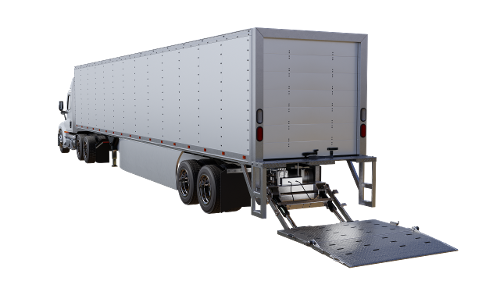
Liftgates are indispensable across logistics, retail, and food delivery. Mounted to the rear of trucks or trailers, they provide a platform for safely raising or lowering heavy cargo when docks aren’t available, especially useful in urban areas or for curbside deliveries.


Liftgates depend on dedicated batteries, which often struggle to stay charged through long routes or multi-stop days. When power runs out, drivers face delays, dissatisfied customers, and emergency maintenance calls, each cutting into profit and productivity.
Solar can also support your truck’s starting batteries and prevent no-start situations, see How Solar Power Can Keep Your Truck’s Starting Batteries Charged and Ready.


Without an external power source, drivers must idle the engine to recharge the liftgate batteries.
This practice:
In some states, idling is restricted or fined, making it an increasingly unsustainable practice. Solar power solves this by keeping batteries charged without the engine running.
Reducing idling saves fuel and lowers emissions. Solar also powers refrigeration and auxiliary systems that often require idling—read more in The Ultimate Guide to Solar Panels for Transportation Refrigeration Units: Boosting Efficiency, Reliability, and Savings.
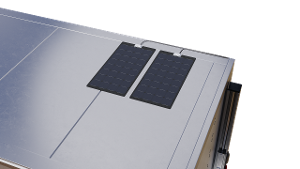
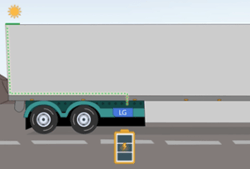
Industry research from NACFE and PowerFilm’s customer field testing confirms that solar panels extend battery life and reduce the need for auxiliary power. Mounted on the trailer roof, solar panels convert sunlight into electricity throughout the day, charging batteries whether trucks are moving or parked.
Solar panels deliver steady, renewable power, preventing deep discharges and extending battery health. This ensures liftgates are always ready to operate when needed, eliminating common causes of breakdowns and delays.
A PowerFilm customer tested a 440W solar configuration (four 110W panels paired with a high-efficiency charge controller) under realistic delivery conditions. During 29 lift cycles moving 2,000-pound pallets in partly cloudy conditions, the battery voltage dropped by only 0.09 volts while lifting, resulting in about a 14% state-of-charge loss.
The takeaway: PowerFilm’s system effectively offsets liftgate energy use and sustains performance throughout an entire delivery day.
Integrating solar technology into commercial trucking delivers measurable operational and environmental benefits:
Solar power can also stabilize and extend power for on-board systems such as telematics and sensors. Learn more in Why Solar Power is the Key to Reliable Telematics in Commercial Trucks.
Solar ensures liftgates are always powered, enabling uninterrupted loading and unloading throughout the route. This dependability boosts driver confidence and delivery consistency.

Solar panels contribute to substantial cost savings by reducing the need to idle the engine to charge liftgate batteries. This results in lower fuel consumption and minimized wear and tear on the engine, leading to lower maintenance expenses. Additionally, by harnessing renewable energy, solar panels reduce the carbon footprint of delivery fleets, helping companies meet environmental regulations and enhance sustainability efforts.

Unlike one-size-fits-all kits, PowerFilm designs liftgate systems to match your fleet’s exact power profile. Each setup is engineered for optimal efficiency without overselling or underdelivering.
PowerFilm solar panels install quickly, minimizing downtime and setup effort. Panels mount directly to the trailer roof with adhesive or low-profile brackets, and wiring connects cleanly to the liftgate battery system. The modular design works with standard charge controllers, letting fleets choose the best components while maintaining high charging efficiency.
Recent 440W field tests validated PowerFilm’s real-world reliability, maintaining liftgate operation with minimal power loss even in suboptimal sunlight.
With over 50,000 panels supplied to transportation markets and two decades of proven results, PowerFilm provides American-assembled products and responsive U.S.-based support.
Curious how solar pays off for fleets in the real world? Read What’s the Return on Investment for a Commercial Trucking Solar Solution?


Are solar panels durable enough for trucking?

How are PowerFilm solar panels installed on trailers?
What maintenance is required?
Can solar panels be installed on existing trailers or only on new ones?
For more ways solar can improve fleet performance, explore our Commercial Transportation Solar Solutions page.
After seeing how solar liftgates perform in real-world operations, the benefits for your fleet are clear.
Solar-powered liftgates improve uptime, reduce costs, and enhance fleet sustainability. PowerFilm’s custom-engineered systems eliminate unreliable liftgate batteries and idling, keeping your operation efficient, sustainable, and ready for the road ahead.
Contact PowerFilm today to learn how solar can keep your fleet moving.
Take this blog post with you!
.jpg)