 Seth Hansen
How Solar Supports Persistent Autonomy in Uncrewed Maritime Systems
 Seth Hansen : August 11, 2026
This blog post was co-created with AI.
Key Takeaways
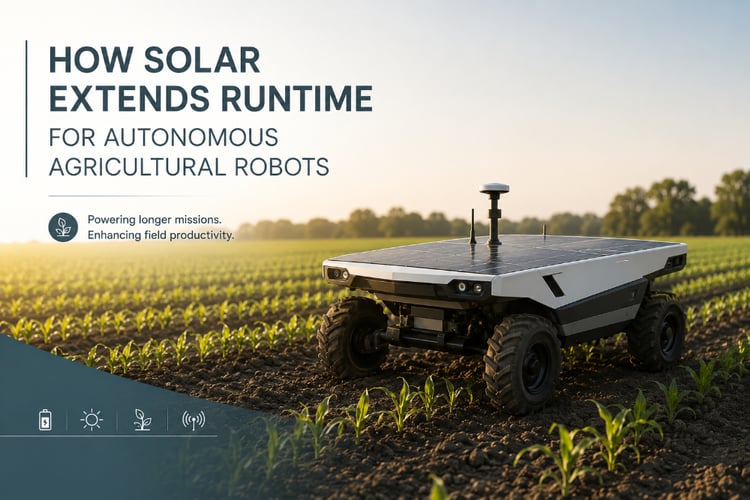
As autonomous technologies continue to transform agriculture, equipment manufacturers and robotics developers face a common challenge: how to maximize operational uptime in demanding field environments.
From autonomous scouting platforms and precision spraying systems to robotic weed control and remote monitoring equipment, today's agricultural robots rely on an increasing number of sensors, cameras, communication devices, GPS systems, and onboard computing hardware. While these technologies improve productivity and decision-making, they also create growing power demands.
As the industry pushes toward longer operating windows and reduced human intervention, power management is becoming just as important as autonomy itself.
One solution gaining attention is integrating solar technology into autonomous agricultural platforms.
Take this blog post with you!
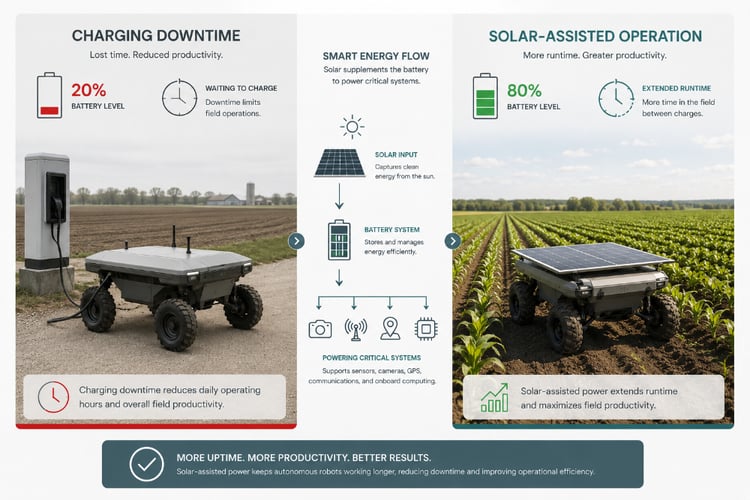
Agricultural robots are often deployed in large, remote environments where access to charging infrastructure may be limited. Even when a robot is not actively performing tasks, onboard systems continue to consume power through:
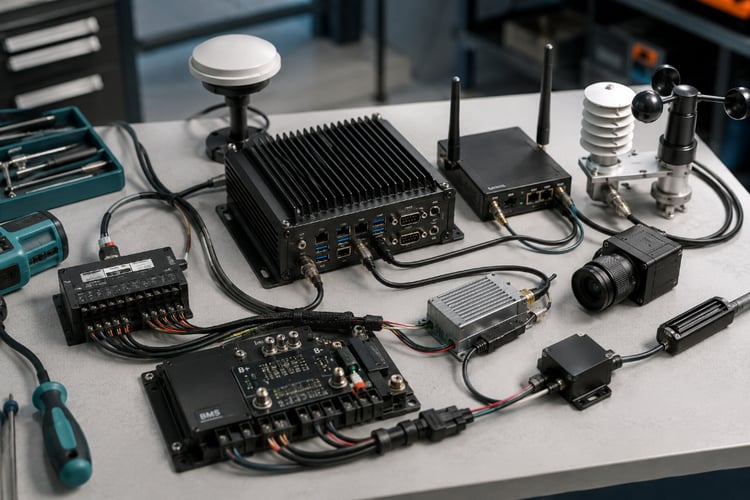
As these systems become more sophisticated, battery capacity alone may not always provide the desired operating duration.
For many agricultural operations, charging downtime can reduce productivity and create logistical challenges, particularly during critical planting, spraying, or harvesting periods.
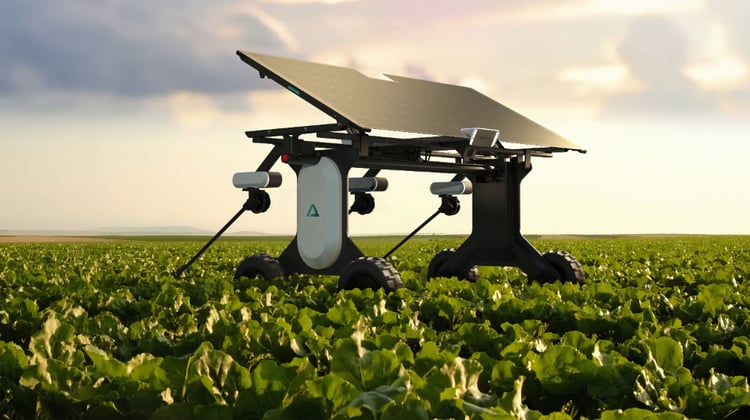
Rendering of Aigen’s Element robot featuring an integrated 350W PowerFilm custom-designed solar panel.
One example is Aigen's Element, a fully autonomous robot for chemical- and fossil-fuel-free weed control, which uses a 350W custom PowerFilm panel to power its field energy system.
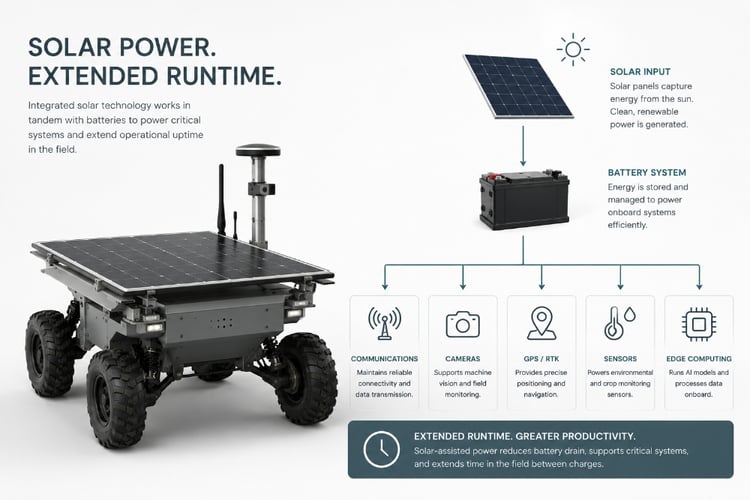
While solar may not replace batteries in most autonomous agricultural applications, it can play an important role in extending runtime and improving energy efficiency.
Think of solar as extending a robot's workday, not replacing its battery.
When integrated properly, solar can supplement onboard power systems by:
Key takeaway: Solar works best as part of a complete energy management strategy, not as a battery replacement.
For autonomous platforms that spend extended periods in open-field environments, solar energy is a readily available resource that can enhance overall system performance.
The result is not necessarily a fully solar-powered robot, but a more efficient and resilient power architecture.
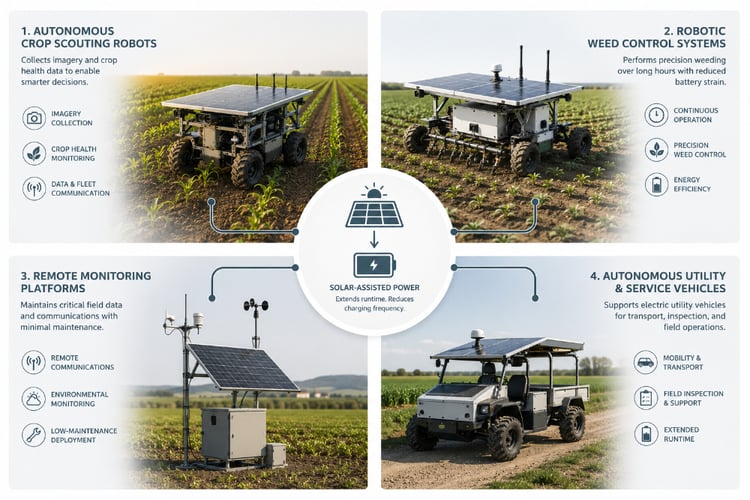
Several emerging agricultural technologies are particularly well-positioned to benefit from solar-assisted power systems.
Scouting robots frequently operate at low speeds while collecting imagery, crop health data, and environmental measurements. Solar can help offset continuous sensor and communication loads while supporting longer deployment periods.
Autonomous weeding platforms often spend long hours navigating fields. Supplemental solar power can contribute to longer run times, overall energy management, and reduced battery strain during operation.
Many agricultural monitoring systems remain deployed in the field for extended periods. Solar can help maintain batteries and power communications equipment with minimal maintenance requirements.
Electric support vehicles used for transportation, inspection, and monitoring may benefit from solar-assisted charging systems that extend runtime and reduce charging frequency.
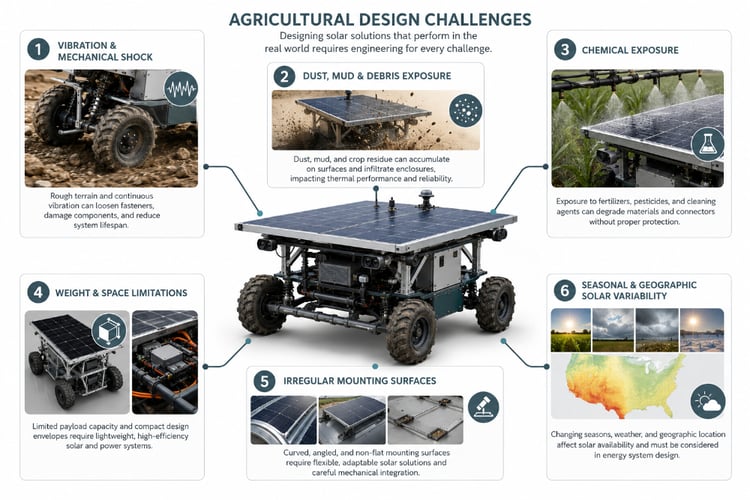
Successfully integrating solar into autonomous agricultural equipment requires more than simply attaching a panel to a robot.
Agricultural environments introduce unique design challenges, including:
To maximize performance, solar solutions must be designed in parallel to battery systems, charging electronics, and overall vehicle power budgeting and system design.
The most effective designs consider the entire energy ecosystem rather than viewing solar as a standalone component.
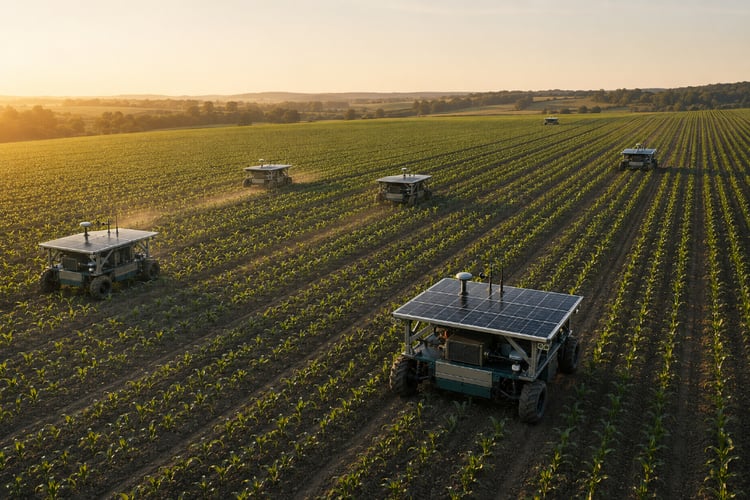
As agricultural robotics continues to evolve, energy management will become a key differentiator between systems that can operate for hours and those that can remain productive in the field for days or even weeks.
Advances in solar technology, lightweight materials, flexible panel designs, and power management electronics are creating new opportunities for OEMs developing the next generation of autonomous agricultural equipment.
Solar integration will not eliminate the need for batteries, but it can help unlock greater uptime, improved operational flexibility, and more efficient field deployments.
For developers seeking to maximize the value of autonomous systems, solar-assisted power is becoming an increasingly important part of the conversation.
At PowerFilm, we work with OEMs and equipment manufacturers to develop custom solar solutions tailored to demanding mobile and outdoor applications.
From ruggedized panel technologies and custom integration support to power system design considerations, our team helps customers evaluate how solar can contribute to longer runtimes and improved energy performance for autonomous platforms.
As autonomous agriculture continues to evolve, OEMs that design solar into their platforms today will be better positioned to deliver longer runtimes, greater reliability, and lower operating costs tomorrow.
Wondering whether solar can extend the runtime of your autonomous platform? Contact us to discuss your application and explore custom solar solutions for agricultural equipment.
In most applications, no. Solar is typically used to supplement battery power rather than replace it. By providing additional energy throughout the day, solar can reduce battery discharge, extend runtime, and decrease charging frequency.
Solar is especially effective for robots that spend extended periods outdoors, such as autonomous crop-scouting platforms, robotic weed-control systems, remote-monitoring equipment, and electric utility vehicles. These applications have consistent access to sunlight and ongoing power demands from sensors, communications, and onboard computing.
Successful integration requires more than selecting a solar panel. Engineers should evaluate the system's power budget, available mounting area, environmental conditions, charging electronics, and expected operating schedule to maximize performance.
The amount of runtime gained depends on factors such as the robot's power consumption, battery capacity, solar panel size, sunlight conditions, and daily operating cycle. A properly designed solar-assisted system can significantly reduce battery drain and help keep equipment operating longer between charging cycles.
Take this blog post with you!