
30 min read
This blog post is adapted from Ham Radio Field Day on Solar Power: A Practical Guide to Solar-Powered Field Deployment, by Julian OH8STN. The Kindle and paperback are available on Amazon.
Introduction
The beginning of this article may seem a bit theoretical, but I assure you, much of what follows is based on my own solar-powered field deployments.
Let’s begin.
From a training perspective, ARRL Field Day, or any amateur radio Field Day event worldwide, is an excellent opportunity to exercise field station deployment and, in some cases, emergency communications readiness. More importantly, Field Day gives operators a practical opportunity to test how quickly they can deploy a complete field station under real-world conditions while managing power, antennas, operating position, and communications capability as a complete integrated system.
For many operators, Field Day focuses on antennas, radios, making contacts, and collecting contest points. In contrast, for others, it offers an opportunity to stress-test their station’s off-grid power system under realistic field conditions. Although power is the foundation of the entire field station, it is often treated as an afterthought, even though every radio, computer, display, battery charger, and digital communications tool depends entirely on the stability and efficiency of the power system that supports it.
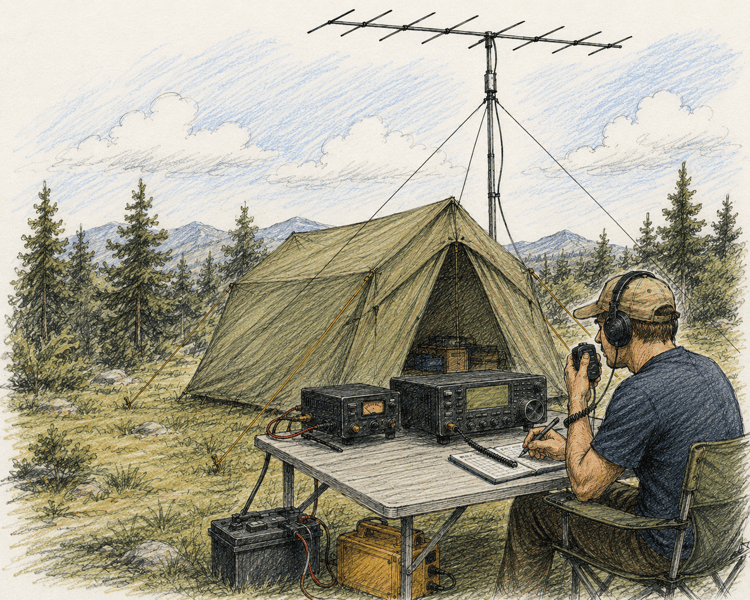
In practical terms, Field Day provides a simple but realistic environment to determine whether a station can operate completely off-grid for the duration of the event, transforming the exercise into far more than a contest or social gathering. When approached from a preparedness or emergency communications perspective, Field Day becomes an opportunity to validate the entire station architecture, including rapid deployment capability, energy production, battery storage, power distribution, operating efficiency, and long-term sustainability under field conditions.
This is particularly important because many operators spend considerable time optimizing antennas, radios, feed lines, and logging software while investing far less attention in the power system, which ultimately determines how long a station can remain operational without grid power. A poorly planned power system can quickly become the limiting factor of the entire deployment, regardless of how capable the radios or antennas are.
Field Day also provides operators with an opportunity to test rapid station deployment under practical conditions, where setup speed, equipment organization, cable management, weather exposure, and energy efficiency all become part of the operating experience. Rather than treating power as a separate subsystem, the most effective field stations approach energy as an integrated component of the communications platform itself, especially when the goal is sustained off-grid operation for the duration of the event without dependence on generators or grid power.
Among the various off-grid power options available to amateur radio operators, solar power offers several unique advantages during Field Day operations, particularly when paired with efficient radios, modern lithium-based battery systems, and realistic energy management practices. Unlike generators, which introduce noise, RF hash, fuel requirements, mechanical complexity, exhaust, and additional logistical burden, a properly designed solar power system can support sustained field operations quietly and with very little maintenance while simultaneously encouraging operators to think critically about station efficiency, power consumption, and long-term operational sustainability.
Building an Off-Grid Field Station
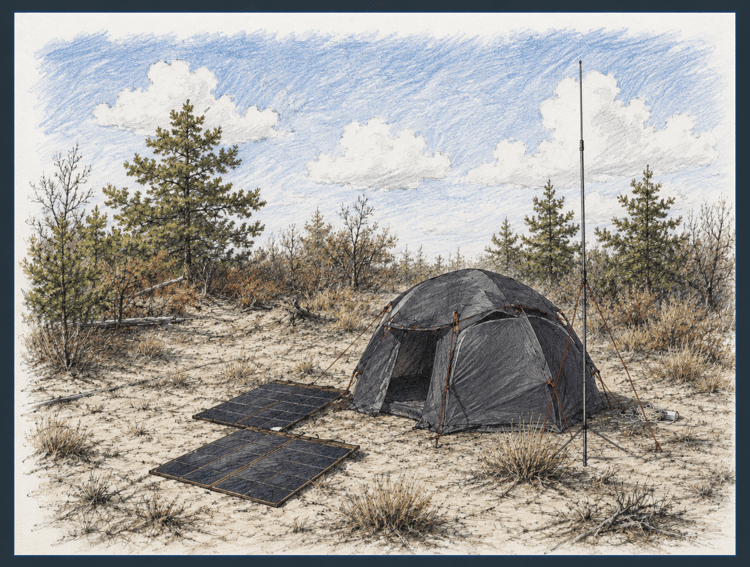
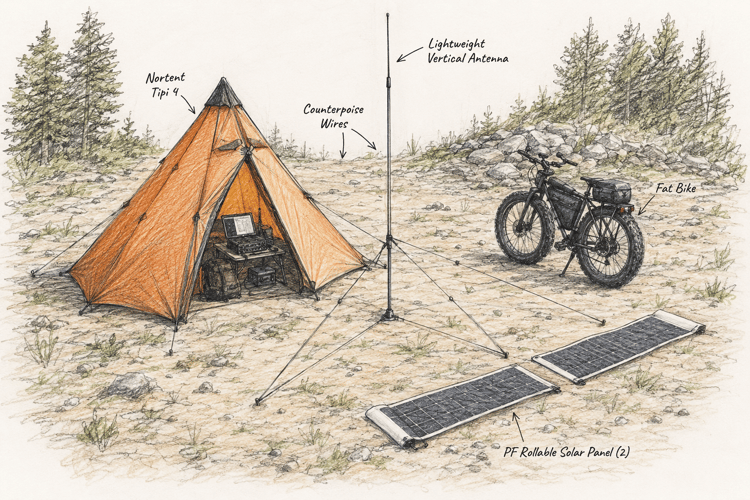
Illustration of OH8STN Field Station during a recent field day event.
Foundation
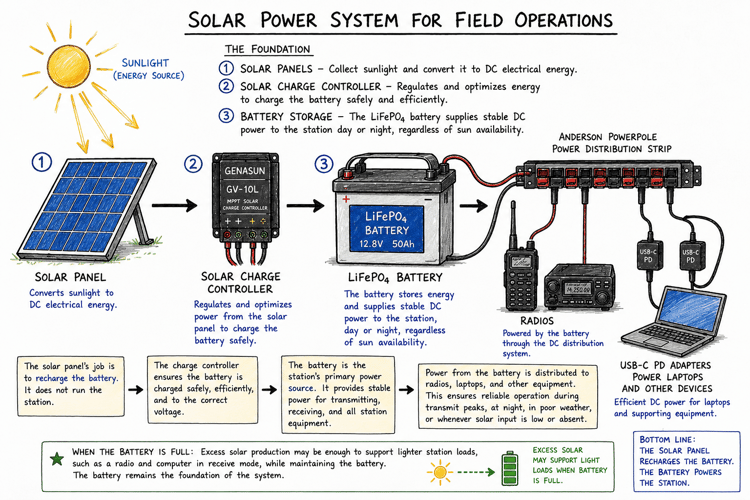
At the foundation of every solar-powered field station are three core components: solar panels, battery storage, and a solar charge controller. The solar panel collects sunlight and converts it into DC electrical energy. The charge controller regulates and optimizes that energy so the battery can be charged safely and efficiently. The LiFePO4 battery powers the station, supplying energy to the radios, computers, and supporting equipment regardless of whether the sun is available.
From the battery, power is distributed to the station via an Anderson Powerpole power distribution strip. Radios can be connected directly to the DC distribution system, while USB-C Power Delivery adapters can provide efficient DC power for laptops and other supporting equipment. In this configuration, the solar panel’s primary job is to recharge the battery, not to run the entire station directly.
- When the battery is already fully charged, excess solar production may be enough to support lighter station loads, such as a radio and computer in receive mode. However, the battery remains the foundation of the system because it provides the stable reserve needed for transmitting, operating after sunset, and maintaining station capability when solar production drops.
Station Types
There are really no fixed limits on how small or how large a Field Day station can be. If you can pack it, pull it, haul it, or transport it into the field, it can become part of your Field Day station.
When it comes to Field Day, we must answer a few important questions, as those answers ultimately define the goals of our Field Day and the requirements of the off-grid solar power system needed to fulfill them. First and foremost, what type of station are we deploying?
For this article, I will focus on three of my favorite Field Day station configurations:
- Man-Portable QRP Field Station
- Fixed Field Station
- Vehicle-Supported Multi-Op Field Station
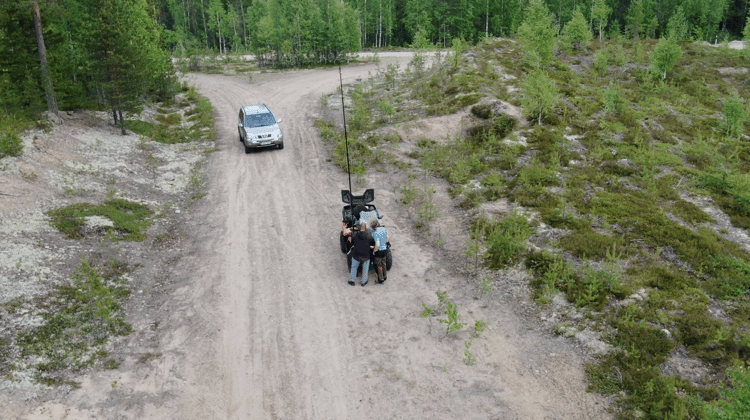
Field Day stations can scale from backpack-portable QRP kits to vehicle-supported deployments. The common requirement is the same: the station must be transportable, deployable, and sustainable under real field conditions.
Man-Portable QRP Field Station
Throughout the history of my channel and blog, the man-portable field station has been my favorite type of station to deploy. For my needs, these stations usually consist of a QRP radio, a tablet computer for data modes, either a lightweight wire antenna or a rapid-deployment vertical antenna, an external battery, a charge controller, and a lightweight solar panel.
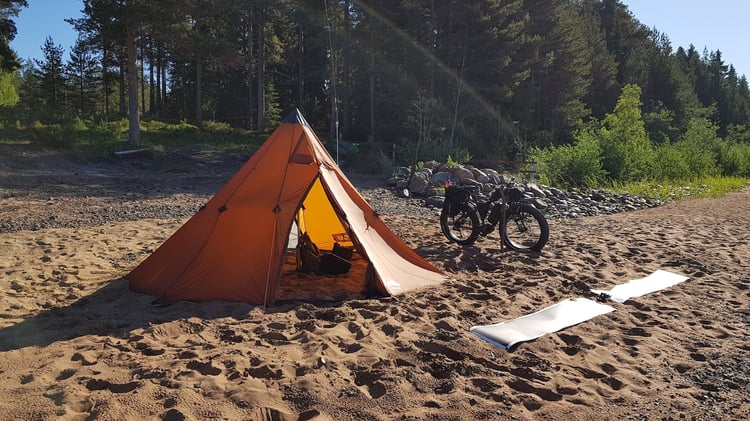
A man-portable field station does not have to mean backpack-only. In this context, man-portable means human-powered transport, whether carried in a pack, moved by bicycle, pulled on a small cart, or otherwise deployed without vehicle support. This type of station keeps the footprint small while still providing shelter, solar charging, battery storage, radio capability, and enough flexibility to operate from locations larger stations cannot reach.
In the image above, I deployed my field station using an electric pedal-assist fat bike, a tipi tent shelter to protect me from the wind and the radio equipment from the sun, and two rollable PowerFilm solar panels to keep the station topped up throughout the deployment.
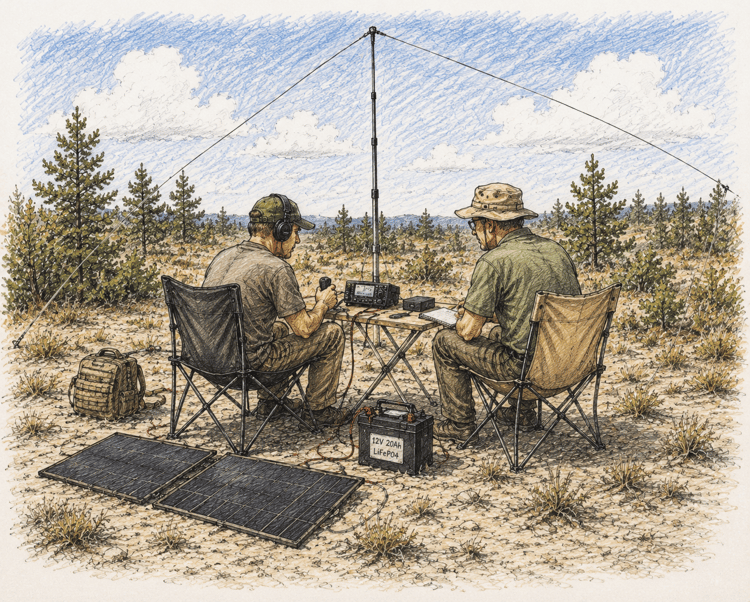
A man-portable QRP field station is usually operated by one or two operators.
The primary advantage of a man-portable QRP field station is mobility. Lightweight, compact, and relatively easy to deploy, these stations can often be carried into locations that larger fixed stations, vehicle-supported stations, or contest stations simply cannot reach.
This portability also provides flexibility. The station can be rapidly deployed, relocated, or packed down if operating requirements, weather conditions, or site accessibility change during the event.
A well-designed man-portable station can also be surprisingly efficient. Lower power levels, efficient radios, lightweight antennas, modest battery capacity, and realistic operating practices often allow these stations to remain operational for extended periods while placing relatively light demands on both the battery and the solar charging system.
From a practical Field Day perspective, man-portable stations encourage operators to focus on efficiency, simplicity, mobility, and sustainability. Every pound or kilogram carried into the field matters, every amp-hour matters, and every piece of equipment must justify its inclusion in the pack.
Perhaps most importantly, man-portable stations allow operators to operate from locations that may offer advantages unavailable to larger deployments. Remote hilltops, trail systems, islands, parks, forests, and other difficult-to-reach locations can often be accessed by a single operator carrying a complete communications capability by human power.
The tradeoff, of course, is that portability usually comes at the expense of available power, operating comfort, battery capacity, antenna size, and overall station capability. Even so, a well-designed man-portable station can often achieve impressive results while maintaining an exceptionally small logistical footprint.
Conceptual layout
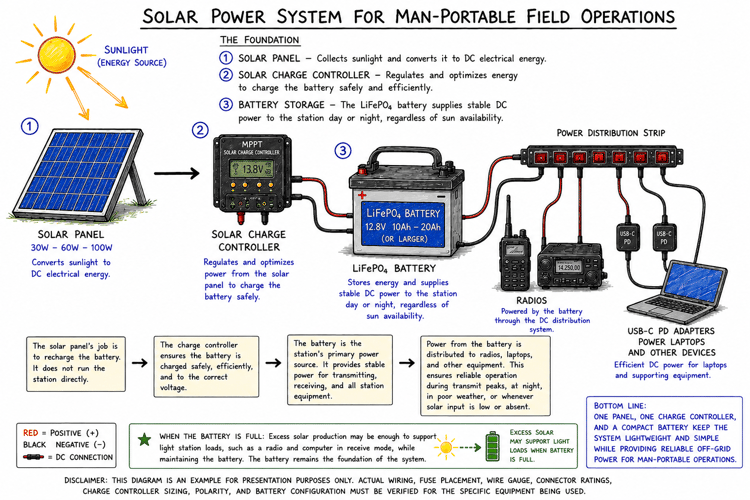
This diagram shows a conceptual power-flow layout for a man-portable solar-powered field station. A compact solar panel collects sunlight, passes it through a solar charge controller, and recharges a small LiFePO4 battery. The battery then supplies stable DC power to the station through a simple power distribution strip.
This layout is optimized for man-portability rather than maximum charging capacity. The goal is to keep the station lightweight, efficient, and easy to deploy while still supporting radios, USB-C Power Delivery adapters, laptops, and other small field accessories. In this configuration, the solar panel is not the station's foundation. The battery powers the station, while the solar panel and charge controller help restore the energy used during operation.
Fixed Field Station
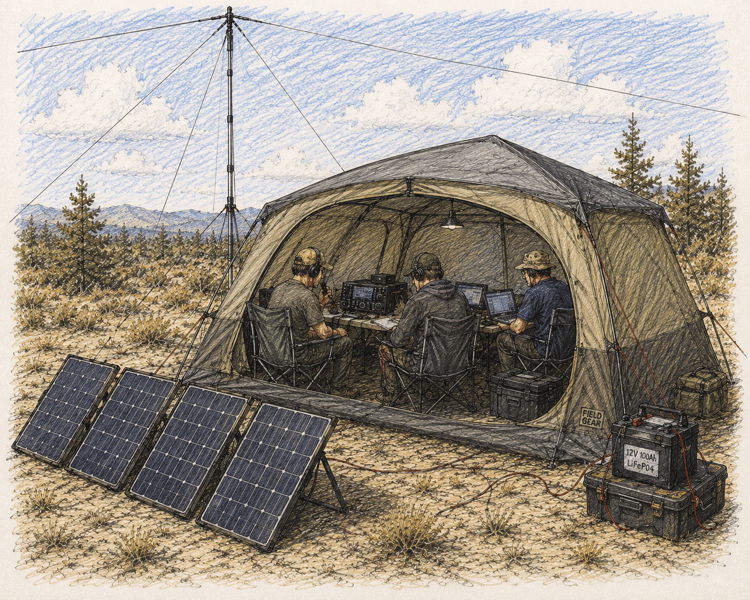
A fixed field station gives operators more room for radios, computers, larger batteries, higher-capacity solar panels, taller masts, and more capable antenna systems. It sacrifices some portability compared to a man-portable station, but gains operating comfort, station capability, and the ability to support longer off-grid operating periods.
A fixed field station offers many of the same advantages as a man-portable station, but with greater capability and generally fewer restrictions on equipment size, antenna systems, battery capacity, and available power. The tradeoff is that these stations are typically less portable, more complex, and take longer to deploy.
The additional capability often allows operators to run higher power levels and better antenna systems than would be practical in a purely man-portable deployment. More efficient, higher-gain antennas and higher transmit power can often help the station rise above the noise and improve the likelihood that signals are heard and answered.
Those advantages do not come without cost. Supporting higher power levels and larger station configurations usually requires additional battery storage, increased solar generation capacity, larger shelters, taller masts, and more supporting equipment. As capability increases, so do the weight, volume, transport requirements, and overall complexity of the deployment.
While a fixed field station can certainly be made man-portable if carefully designed, it is more commonly supported by a vehicle. This allows operators to transport larger solar arrays, additional battery storage, taller masts, and more capable antenna systems without the weight and volume restrictions normally associated with backpack-portable operation.
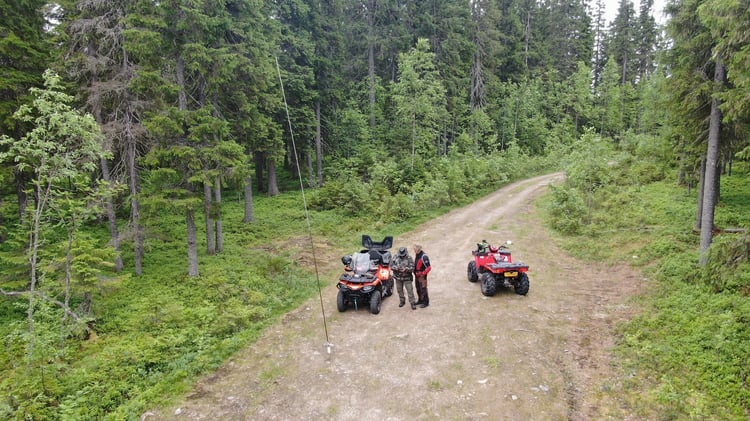
A fixed field station does not have to be tied to a permanent location. Vehicle support, including ATVs, allows operators to transport larger antennas, additional battery storage, solar equipment, and support gear while still operating from remote field locations.
From a practical Field Day perspective, the fixed field station occupies a useful middle ground between the lightweight simplicity of a man-portable station and the much larger infrastructure often associated with high-power multi-operator contest stations. It sacrifices some portability in exchange for increased capability, operating comfort, and the ability to support more demanding operating requirements.
What I would do differently compared to the Man-Portable Station
Compared with the man-portable station, the fixed field station can support a larger, more capable solar charging system. Instead of relying on a single compact panel, a small battery, and the lightest practical equipment, the fixed station can use larger solar panels, additional charge controllers, greater battery storage capacity, and more capable power distribution.
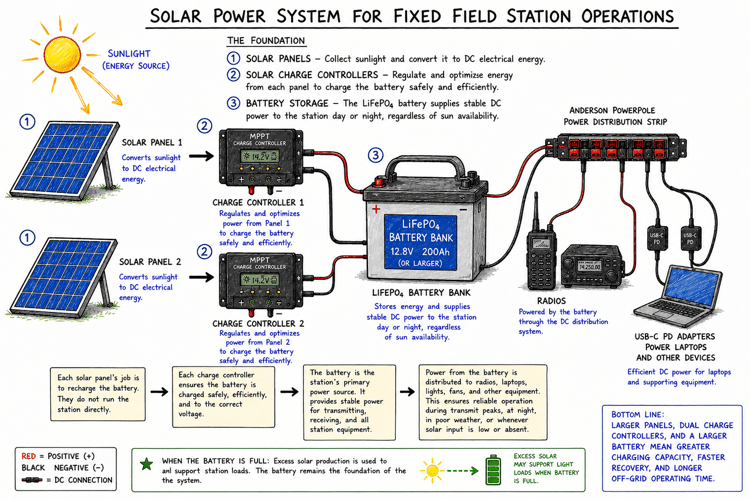
Example fixed field station power-flow diagram. This illustration is provided for conceptual understanding only. Actual wiring, fuse placement, wire gauge, connector ratings, charge controller sizing, polarity, and battery configuration must be verified for the specific equipment being used.
In this example, each solar panel feeds its own solar charge controller. The first solar panel connects to the first charge controller, which then charges the LiFePO4 battery bank. The second solar panel connects to its own second charge controller, which also charges the same battery bank. This keeps each solar panel managed independently while allowing both panels to contribute energy to the shared battery system.
The battery remains the station’s primary power source. Radios, computers, lighting, USB-C Power Delivery adapters, and other supporting equipment are powered from the battery through the DC distribution system. The solar panels are there to recharge the battery and extend operating time, not to replace the battery as the station's foundation.
The advantage of this approach is greater charging capacity, faster recovery after heavy operating periods, and better support for larger station loads. A fixed field station may operate at higher transmit power, with multiple radios, logging computers, accessories, and lighting for longer periods, so the power system must be scaled to meet the increased demand. The tradeoff is additional weight, more wiring, more setup time, and greater overall system complexity.
Vehicle-Supported Multi-Op Field Station
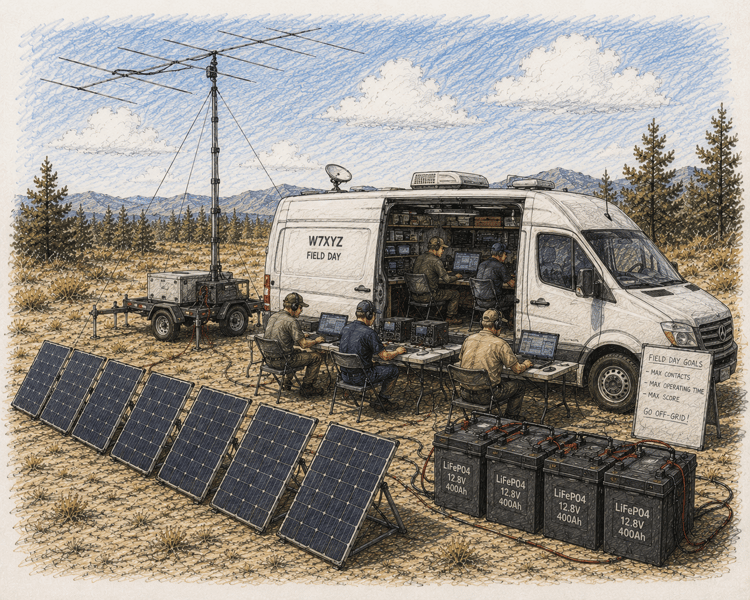
A high-power multi-operator field station is designed specifically to maximize contacts, operating time, and contest points while remaining completely off-grid for the duration of the event.
The primary purpose of a vehicle-supported multi-operator Field Day station is to maximize station capability, operator capacity, operating time, and ultimately the number of contacts and points collected during the event. These stations are often used by emergency communications teams that utilize Field Day as a training exercise, allowing operators to gain valuable experience deploying, operating, and sustaining communications capability under off-grid conditions.
Being vehicle-supported offers considerable flexibility in how the station is configured. Operators may work from inside the vehicle, under an attached awning, from a nearby shelter, or from a combination of operating positions. There is no single correct way to build or deploy this type of station.
The primary advantage is capability. A dedicated communications vehicle can transport substantially more equipment than either a man-portable or fixed field station. Larger solar arrays, greater battery storage capacity, taller masts, more capable antenna systems, multiple radios, amplifiers, computers, networking equipment, and supporting infrastructure all become practical options.
These stations may also deploy portable mast systems, either manually raised or hydraulically operated, allowing operators to support larger and more capable antenna systems than would be practical in smaller deployments. Higher-gain antennas, multi-band antenna systems, and higher transmit power can significantly increase station capability across multiple bands simultaneously.
Those advantages come with corresponding tradeoffs. Vehicle-supported stations are generally more expensive, more complex, and require considerably more planning, setup time, transport capacity, and supporting personnel than either man-portable or fixed field stations. They also sacrifice mobility, as many locations accessible to a man-portable or smaller fixed station may simply be inaccessible to a communications vehicle and its supporting equipment.
Unlike a man-portable station that can be carried down a trail or a fixed field station that a small team can often deploy, the vehicle-supported station depends on road access and sufficient space to deploy antennas, solar arrays, masts, shelters, and supporting equipment. The station itself may occupy an area comparable to that of a small campsite, with operators, radios, power systems, antennas, and support equipment spread across the site.
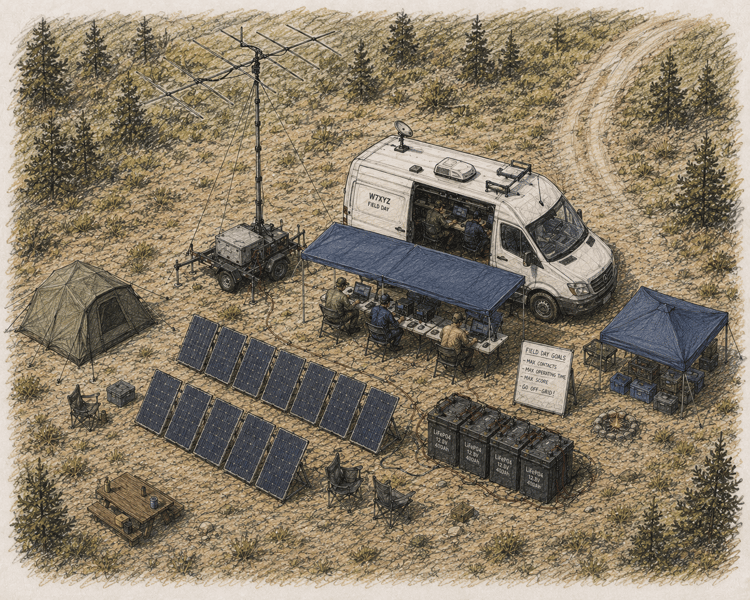
The benefit is that once deployed, the station can support multiple operators simultaneously, operate across multiple bands, support higher transmit power levels, and remain on the air continuously for the duration of the event. Rather than optimizing for portability, the vehicle-supported station is optimized for capability.
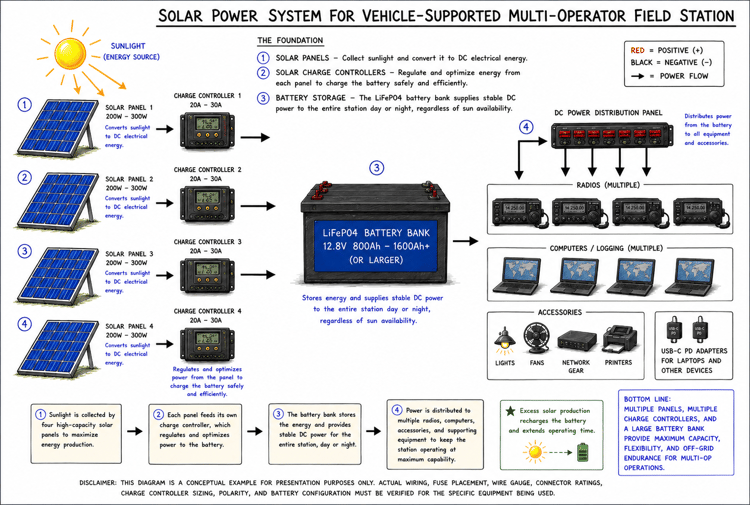
This diagram shows the power-flow layout for a vehicle-supported multi-operator field station. In this configuration, multiple solar panels are used to increase total charging capacity, but each panel is routed through its own solar charge controller before feeding the shared LiFePO4 battery bank.
The reason for using multiple charge controllers is practical. The Genasun GV-10L is RF-quiet enough for weak-signal HF work, which is the main reason I use it. It does not introduce the kind of RF hash or receiver noise that can make weak-signal work impossible. The trade-off is that each controller has a limited solar input capacity, so larger solar arrays must be split across multiple controllers rather than routed through a single unit.
In this type of station, each solar panel feeds one GV-10L charge controller, and each controller charges the same battery storage system. This allows the station to increase solar charging capacity while still preserving the low-noise performance required for HF communications. A larger, higher-capacity charge controller could certainly simplify the wiring. Still, until I find one that does not raise the noise floor or interfere with HF reception, I prefer to separate the solar input across multiple RF-quiet controllers.
The battery bank remains the station’s primary power source. It supplies stable DC power to the radios, computers, logging systems, USB-C Power Delivery adapters, networking gear, lighting, and other equipment through the power distribution system. The solar panels and charge controllers replenish the battery bank and extend operating time. In contrast, the battery storage provides the stable reserve needed to support multiple operators and higher station loads.
Scaling the Power System
Each of these station types places very different demands on energy production, storage capacity, deployment complexity, operating efficiency, and long-term sustainability in the field. A lightweight QRP station designed around low current consumption and efficient operating practices may require only modest solar generation and battery capacity, while a larger multi-operator field station running higher transmit power, multiple radios, computers, displays, networked logging computers, and battery charging systems can quickly evolve into a much more substantial energy-management problem.
The basic building blocks remain the same, but the scale changes dramatically. A man-portable station may use one compact panel, one charge controller, and a small LiFePO4 battery. In contrast, a vehicle-supported multi-operator station may require multiple panels, multiple charge controllers, larger battery storage, and expanded DC distribution. The important point is that the power system must be sized to match the deployed station.
Scaling the power system does not mean simply adding more panels or larger batteries. It means matching solar input, charge controller capacity, battery storage, power distribution, and station loads to the way the station will actually be operated.
Station Efficiency
Before we become overly focused on solar panels, battery capacity, or charging capability, the very first place we should start is reducing the station’s current consumption. Improving station efficiency allows us to remain on the air longer while reducing battery, solar, and charging requirements, deployment weight, and overall system complexity.
In practical off-grid communications, station efficiency is often the single most important factor determining whether a field station remains sustainable over the duration of the event.
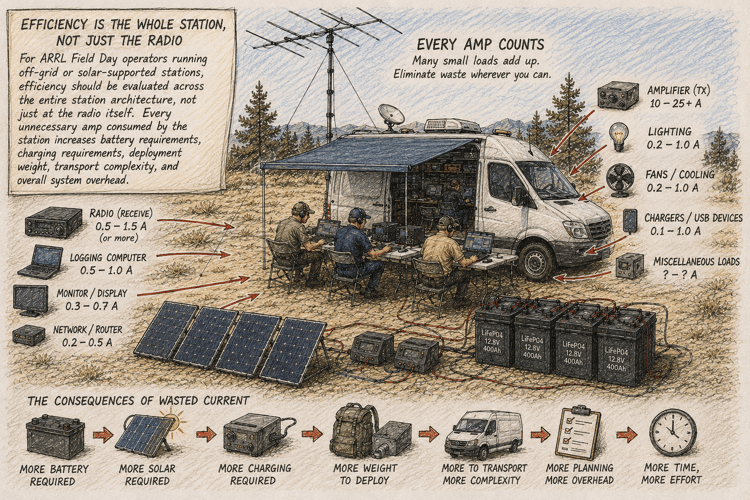
For ARRL Field Day operators running off-grid or solar-powered stations, efficiency should be evaluated across the entire station architecture, not just at the radio itself. Every unnecessary amp consumed by the station increases battery requirements, charging requirements, deployment weight, transport complexity, and overall system overhead.
One of the first benchmarks worth examining is the radio’s current consumption when receiving. During most Field Day operations, especially monitoring, logging, standby, or search-and-pounce, the radio spends much of its time in receive mode. This is one reason I often prefer a QRP-based station architecture using the Icom IC-705 paired with an efficient external amplifier, such as the DL4KA PA500.
In that configuration, the IC-705 and PA500 together draw only 300-500 mA on receive. By comparison, many traditional 100-watt radios can draw 1 to 3 amps continuously on receive before a single transmission is made. Over a long Field Day deployment, that difference matters.
There are exceptions, of course. The newer Icom IC-7300MK2 is one example of a 100-watt-class radio with much lower receive current consumption. I tested it myself at 700-750 mA. That makes it far more attractive for off-grid field use than many older or less efficient 100-watt radios. Even so, the principle remains the same: receive current matters because the radio spends so much of its operating life listening.
Using a simple 50/50 receive/transmit operating example, the receive-current difference alone becomes significant. Over a 24-hour Field Day period, a station drawing 500 mA on receive for half the time would consume about 6 amp-hours just while listening. A station drawing 1.5 amps on receive for the same amount of receive time would consume about 18 amp-hours. That is a 12 amp-hour difference before we even account for transmit current, computers, displays, lighting, or other station loads.
Put another way, at roughly 12.8 volts, that difference is about 150 watt-hours over 24 hours. Over a longer weekend deployment, the gap grows even larger. This is only a conceptual example, but it illustrates the point: receive current is not a minor detail in an off-grid station. It directly affects battery size, solar requirements, charging recovery time, and the station's operational duration.
Transmit efficiency is equally important. Two radios may both output 100 watts of RF, yet one station may draw 12-13 amps during transmission while another draws 20 amps or more to achieve the same output power. That difference directly affects battery runtime, charging requirements, cable sizing, heat generation, and long-term sustainability in the field.
Another major efficiency consideration is avoiding unnecessary DC-to-AC-to-DC conversion whenever possible. Every time energy passes through an inverter, power supply, boost converter, or buck converter, some amount of energy is lost as heat. In practical terms, a station operating primarily on native DC power will usually outperform an equivalent station heavily dependent on AC infrastructure.
For this reason, it often makes sense to choose radios, laptops, displays, networking equipment, and accessories that can operate directly from 12V DC or USB-C Power Delivery. Modern laptops capable of native USB-C PD charging can significantly simplify the station architecture while reducing conversion losses, power supply clutter, and overall system complexity.
Operating mode selection also plays a major role in overall station efficiency. Narrow-bandwidth data modes and CW can often maintain reliable communication capability using substantially less power than voice operation while also improving weak-signal performance under difficult propagation conditions.
This does not mean voice communications are unimportant. It means operators should understand the energy cost associated with each operating mode and choose accordingly based on operational requirements, available energy reserves, propagation conditions, and expected duration of the deployment.
Solar Panels
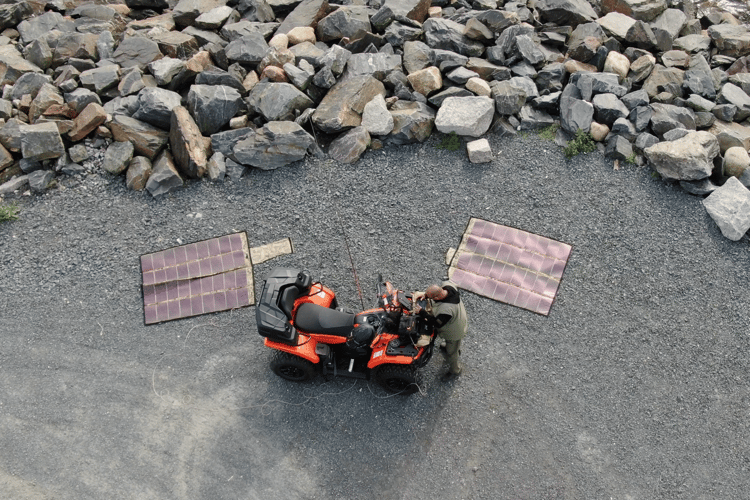
Once station efficiency, operating requirements, and expected energy consumption have been established, the solar panel becomes our primary energy-collection source. It is the component responsible for converting available sunlight into usable DC electricity, either to directly support station loads through the battery system or to replenish the energy consumed during operation.
In practical terms, the solar panel plays a critical role in determining whether the station can sustain long-duration operation without dependence on grid power, fuel resupply, generators, or increasingly larger battery reserves.
For the field radio operator, solar panels generally fall into two broad categories: amorphous thin-film panels and crystalline panels.
Amorphous
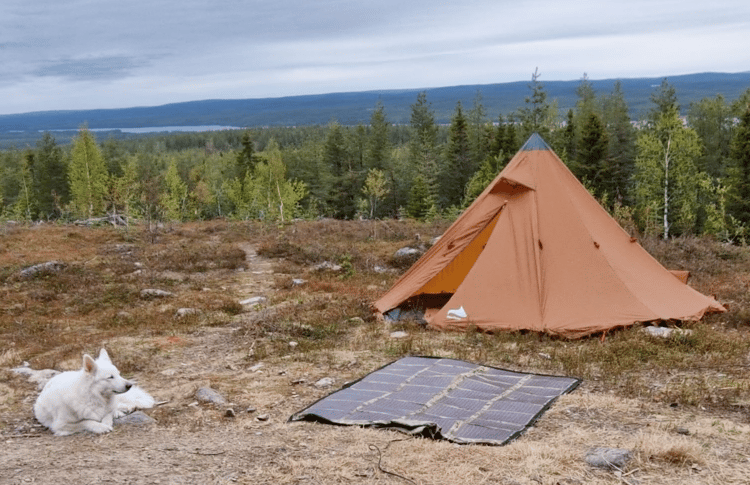
Amorphous thin-film panels are commonly favored for man-portable and expedition-style deployments because they are lightweight, flexible, durable, and continue producing usable energy under less-than-ideal lighting conditions. Unlike rigid crystalline panels, amorphous panels generally tolerate partial shading, low-angle sunlight, overcast weather, and imperfect orientation more gracefully. This makes them particularly useful in northern climates, woodland deployments, rapidly changing weather conditions, or situations where ideal panel placement simply is not possible.
Another advantage of thin-film panels is deployment flexibility. Many amorphous panels can be rolled or folded and rapidly deployed in the field with relatively little setup complexity. For a man-portable station, that matters. A solar panel that can be packed, carried, unrolled, connected, and moved quickly may be more useful in the field than a higher-output panel that is heavier, bulkier, or slower to deploy.
The tradeoff is that amorphous panels usually require more surface area to produce the same output as crystalline panels under ideal full-sun conditions. That does not make them inferior. It simply means they are optimized for a different mission. For lightweight field stations, remote deployments, and situations where durability, flexibility, low weight, and fast setup matter more than maximum output per square meter, amorphous thin-film panels remain one of the most practical choices.
Crystalline
Crystalline solar panels, including monocrystalline and polycrystalline designs, prioritize higher energy density and improved conversion efficiency. These panels typically generate more power per square meter or square foot than amorphous thin-film panels, making them useful for fixed stations, vehicle-supported deployments, cabin stations, or larger off-grid systems where transport weight and panel rigidity are less of a concern.
Monocrystalline panels are generally considered the most efficient among crystalline designs, delivering high output in full sunlight while maintaining a relatively compact footprint. Polycrystalline panels are slightly less efficient, but are still widely used in off-grid systems.
It is important to understand that not all crystalline panels are large, rigid glass panels intended for rooftop installations or fixed deployments. Folding crystalline panels designed for man-portable field use have become increasingly common, including several offerings from PowerFilm Solar. These panels are generally somewhat heavier and less flexible than lightweight amorphous thin-film panels, but usually offer higher efficiency and more charging capability from a smaller deployed area.
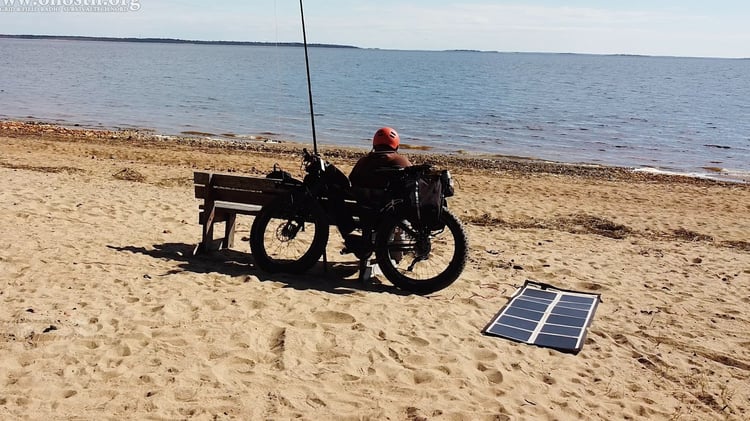
In the image above, the folding crystalline panel is being used in a lightweight field deployment near the shoreline. It is still portable, but it is a different kind of portability from that of a rollable amorphous panel. It may offer higher output from a smaller footprint, but it is usually less flexible, somewhat more rigid, and less forgiving of awkward packing or rough handling.
For many field radio operators, folding crystalline panels represent a practical middle ground between portability, charging capability, deployment speed, and overall system size. They may not pack quite as small or deploy quite as quickly as lightweight amorphous panels, and they may add a few extra pounds or kilograms to the station. Still, they can often deliver substantially more charging capability for the same deployment footprint.
Choosing the Right Solar Panel
There is no universally “best” solar panel for Field Day or emergency communications. The correct panel is the one that meets the station's mission requirements. No manufacturer, reviewer, or outside opinion can decide that for the operator. The station goals, transport method, operating schedule, expected loads, weather conditions, and available deployment space all determine which panel makes sense.
My own field work is almost always done with PowerFilm Solar panels. The three panel types I am most familiar with are amorphous foldable panels, amorphous rollable panels, and crystalline foldable panels. For Field Day and emergency communications, it helps to understand the differences between these three options. They are related, but each has its own strengths, weaknesses, and best use case.
Part of the confusion comes from mixing solar cell technology with panel format. Amorphous and crystalline describe the solar technology. Foldable and rollable describe how the panel is built, packed, transported, and deployed. Once that distinction is clear, it becomes much easier to choose the right panel for the station.
Amorphous foldable panels are often useful when the operator wants lightweight field power in a compact package. They use thin-film technology, so they are flexible, durable, and tolerant of less-than-ideal conditions such as partial shade, heavy cloud cover, low-angle sunlight, and imperfect panel placement. Their main tradeoff is that they usually require more surface area to produce the same wattage as crystalline panels.
Amorphous rollable panels share many of the same thin-film advantages, but their format emphasizes portability, durability, waterproof construction, and repeated deployment in rough field conditions. These panels are lightweight, flexible, and built with non-glass substrates, making them resistant to shattering during transport, setup, teardown, and field use. They make sense when the station needs to stay light, packable, durable, and easy to deploy.
Crystalline foldable panels take a different approach. They usually provide higher output from a smaller physical footprint, making them useful when faster battery charging or higher energy production is the priority. They are generally heavier and less flexible than amorphous thin-film panels. Still, for fixed stations, vehicle-supported stations, off-grid shacks, or larger expedition setups, crystalline foldable panels can make sense because transport weight and panel rigidity are less of a concern.
For a man-portable QRP station, low weight, compact storage, rapid deployment, and operation under less-than-ideal weather conditions may be the highest priorities. In that type of deployment, amorphous foldable or rollable panels may better support the overall mission by helping keep the station small, mobile, durable, and easy to deploy by human power.
A fixed field station may place greater emphasis on charging capability and overall energy production. Because transport constraints are less restrictive, larger, foldable crystalline panels can become practical, providing higher output from a smaller deployment footprint. The operator may accept additional weight and bulk because the station is not being carried entirely on foot.
Vehicle-supported multi-operator stations typically prioritize maximum energy production. These stations may need to support multiple radios, computers, networking equipment, lighting, battery charging, and higher transmit power levels throughout the event. In these situations, crystalline foldable panels or larger crystalline arrays can provide greater charging capability because the vehicle absorbs much of the transport burden.
The practical takeaway is simple. Amorphous foldable panels are useful when low weight, compact storage, and imperfect light performance matter. Amorphous rollable panels are strongest when durability, waterproof construction, packability, and rapid field deployment are the priority. Crystalline foldable panels are strongest when higher output from a smaller deployed area matters more than minimum weight or maximum flexibility.
Ultimately, a solar panel should not be selected simply because it is lightweight, flexible, rigid, compact, or highly efficient. It should be selected because it supports the operational requirements of the station being deployed.
The three panel types discussed above fit a specific lightweight, mobile, field-oriented mission profile. Amorphous foldable, amorphous rollable, and crystalline foldable panels are useful when the station needs to be portable, rapidly deployable, and practical for real field use. That does not mean other solar panels are unusable. Rigid glass-substrate monocrystalline and polycrystalline panels, flexible panels, semi-flexible panels, and other portable solar panels can all be useful if they meet the weight constraints and transport method, and produce enough energy to keep the station on the air.
The important point is that the panel should support your Field Day goal rather than define it. A budget portable panel may be perfectly acceptable for a fixed or vehicle-supported station if weight, pack size, and rough handling are not major concerns. In many cases, the strongest advantage of generic portable solar panels is cost. If the panel provides sufficient charging capacity, works with the charge controller, withstands the expected deployment conditions, and fits the way the station will actually be transported and used, it may be the right choice for that specific Field Day build.
At this point, the solar panel discussion returns to the same principle that applies to the rest of the field station: choose equipment that supports the mission. For my own lightweight, highly mobile deployments, PowerFilm panels make sense because they align with how I operate. For another Field Day station, especially a fixed or vehicle-supported build, a different panel may make more sense. Panel technology matters, but it should never be separated from the operating plan, transport method, battery size, charge controller, expected weather conditions, and the station's energy requirements. The right solar panel is the one that keeps your station on the air.
Battery Charging, Storage, and DC Power Distribution
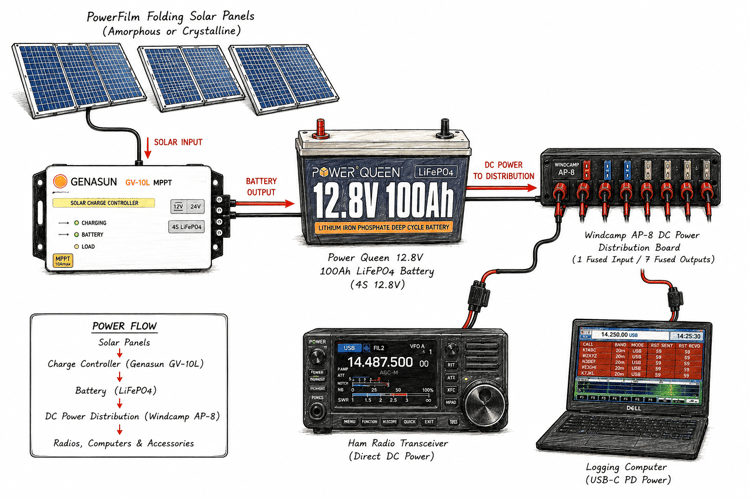
Charge controller
After selecting the solar panel, the next part of the system is the charge controller. The charge controller sits between the solar panel and the battery. Its job is to take the energy coming from the panel and regulate it so the battery can be charged safely and correctly.
In a solar-powered field station, the charge controller is one of the main lines of defense protecting the battery. When sunlight hits the solar panel, the panel produces DC electricity, but that output varies with sunlight, temperature, cloud cover, shading, and panel angle. The charge controller manages that changing input and delivers charging current to the battery in a controlled way.
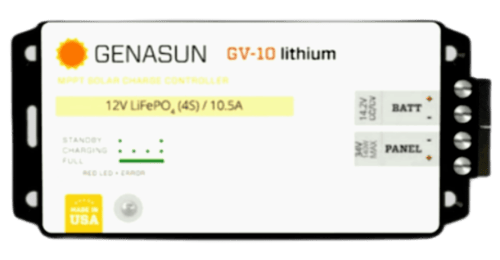
This matters because the battery should not simply be connected directly to the solar panel and left to manage itself. A proper charge controller helps prevent overcharging, limits charging to the correct voltage range, and follows the charging profile required by the battery chemistry. For LiFePO4 batteries, that means using a controller designed for lithium iron phosphate, not one intended for lead-acid batteries.
For this type of 12-volt field station, I use the Genasun GV-10L for 4S LiFePO4 batteries. The GV-10L uses the constant-current, constant-voltage charge profile required by LiFePO4 chemistry. A charge controller intended for lead-acid batteries should not be treated as interchangeable with one intended for lithium batteries. Lead-acid charging logic and LiFePO4 charging logic are not the same thing.
The solar panel collects energy, but the Genasun GV-10L controls how it is delivered to the battery. This is what makes the charging process controlled rather than random. In a field station, that control matters. The station may be operating under full sun, broken cloud cover, low-angle sunlight, or rapidly changing weather. The charge controller helps maintain a stable, appropriate charging process for the battery being used.
Battery Storage
The next part of the system is battery storage. This is where the station actually gets its operating reserve. The battery is not just a convenience; it is the buffer between the station and the solar panels. Running radio equipment directly from a solar panel may work briefly in perfect sunlight, but the moment a cloud passes, the panel's output can drop. If the station demands more current than the panel is producing, the station can shut down. The battery prevents this by providing a stable power supply to the station while the solar system works in the background to replace the energy being used.
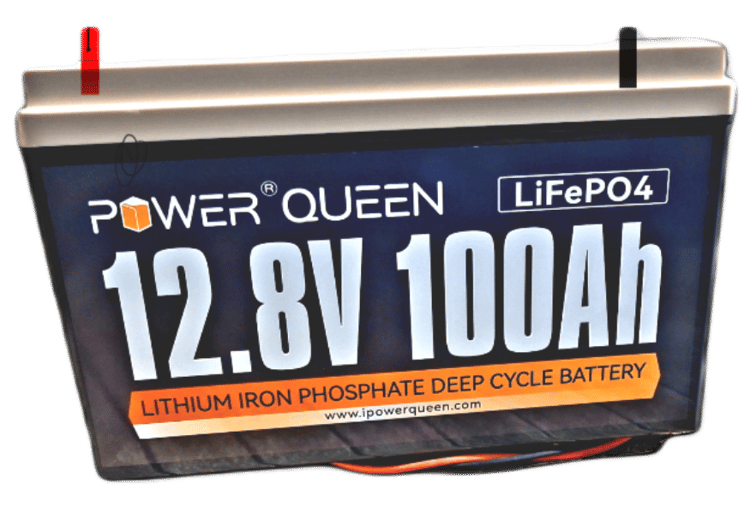
For this type of 12-volt field station, I prefer a 4S LiFePO4 battery system. A 4S LiFePO4 battery has a nominal voltage of 12.8 volts, which fits well with the DC power requirements of most ham radio equipment. It keeps the station simple, avoids unnecessary voltage conversion, and allows radios, distribution boards, and accessories to remain within the practical voltage range expected by typical field communications gear.
For battery storage, my own off-grid ham shack project uses Power Queen 12.8-volt, 100-amp-hour LiFePO4 batteries. In that system, four 100 amp-hour batteries are connected in parallel, giving the station 400 amp-hours, or roughly 5120 watt-hours, of storage. For a Field Day station, the exact battery size may be smaller or larger depending on the mission. Still, the principle is the same: the battery must be sized to support the station load, operating schedule, transmit duty cycle, computers, lighting, and expected solar recovery.
Power Distribution
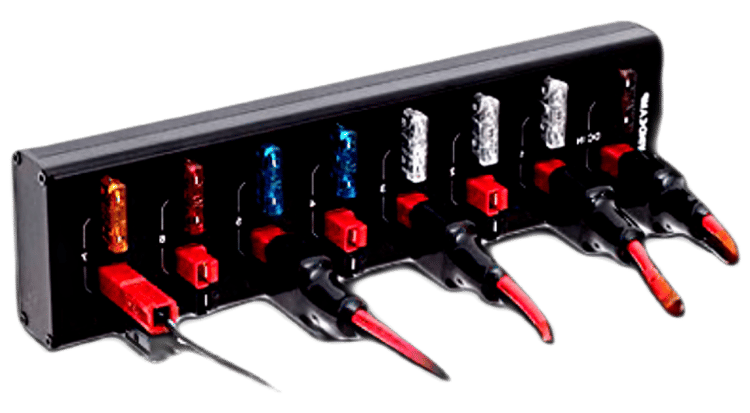
From the battery, power needs to be distributed safely and practically. In my ham shack project, I use the Windcamp AP-8 power distribution board. It provides one fused DC input and seven fused DC outputs, allowing a single battery connection to feed multiple station loads. That might include radios, a computer, lighting, charging cradles, USB-C power adapters, or other low-voltage accessories used during the event.
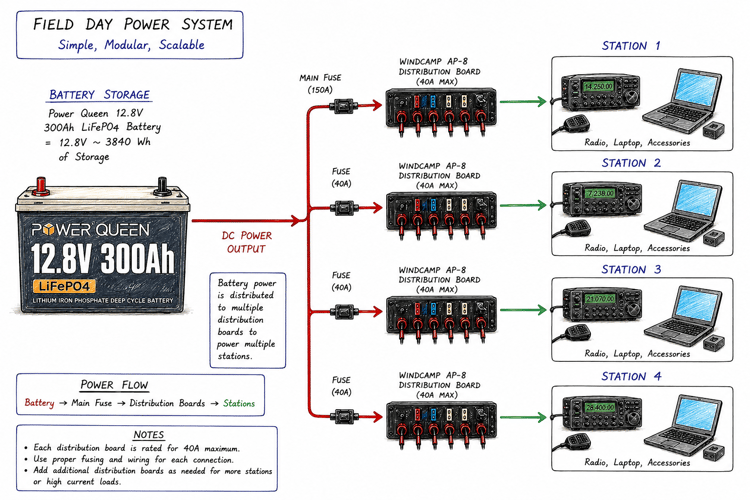
This does not mean the distribution board magically divides the load or protects the operator from poor planning. The battery, wiring, fuses, connectors, and distribution board all need to be sized for the actual current the station may draw. If too much current is drawn through a single distribution board, voltage can drop, components can be overstressed, and the system can become unreliable or unsafe. When the station has multiple high-current loads, it may make more sense to use multiple power distribution boards, with each board properly connected to the battery storage and each kept within its rated current limit. For example, if one board is limited to 40 amps, a second or third board can be added to handle additional high-current loads, rather than forcing everything through a single distribution point. The operator still needs to test the station, measure the loads, correctly size the wiring and fusing, and understand what each connected device actually consumes.
For Field Day, this layout keeps the station practical and easy to understand. The solar panel feeds the charge controller. The charge controller charges the LiFePO4 battery. The battery feeds the DC distribution system. The distribution board then powers the radios, computers, and accessories needed to keep the station on the air.
That simple flow matters. When something fails in the field, we do not want a power system so complicated that troubleshooting becomes an emergency in itself. A good field power system should be modular, fused, DC-native, and easy to follow with tired eyes after hours of operating. Each part should have a clear job: collect energy, regulate charging, store energy, distribute power, and support the station load.
This is the real value of building the power system this way. It avoids unnecessary complexity while keeping the station RF-conscious, field-serviceable, and scalable. Whether the station is a small QRP deployment or a larger multi-operator Field Day setup, the goal remains the same: keep the station powered, safe, and on the air.
Choosing an Efficient Off-Grid Friendly Radio
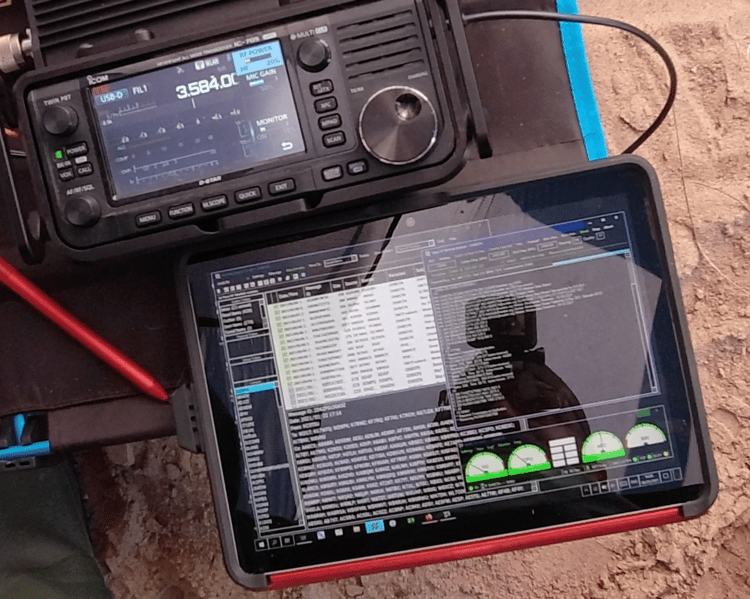
Current consumption is one of the most important details in an off-grid ham radio station. It is easy to focus on transmit power, antenna gain, solar panel size, or battery capacity, but the radio itself can make or break the station's sustainability. If the radio consumes too much current on receive, the battery is being drained even when we are not transmitting. Over the course of Field Day, the current adds up.
For a solar-powered station, the goal is not only to have enough battery capacity to run the radio. The better goal is to build a system in which the solar panel and charge controller can produce more current during daylight than the radio consumes while sitting in receive mode. If the radio draws one amp on receive, the solar charging system should ideally be capable of producing more than that, and preferably much more, so the battery is being maintained or recharged while the station is operating. That extra margin also helps support the rest of the station, including the computer, interface, lighting, USB-C adapters, and other accessories.
This is why receive current matters so much. A radio drawing 700 or 800 milliamps on receive is far easier to support from a modest solar and battery system than a radio drawing 2 amps before a single transmission is made. The difference may not look dramatic on paper. Still, over a full Field Day operating period, it directly affects battery size, solar panel requirements, recharge time, and how long the station can remain on the air.
Transmit current matters as well. Two radios may both produce 100 watts of RF output, but that does not mean they consume the same amount of power from the battery. A radio drawing 23 amps at 100 watts places a much heavier load on the battery than a radio drawing 12 amps at the same RF output. Even with the same duty cycle, the less-efficient radio burns through its stored energy faster and demands more from the solar charging system.
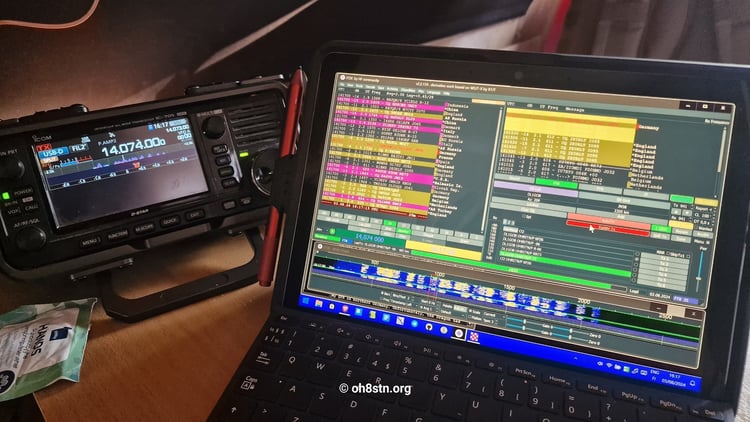
In my own field work, the Icom IC-705 is one of my preferred QRP radios because it has relatively low receive current and is efficient on transmit. For lightweight man-portable stations, that kind of efficiency matters. Radios such as the Xiegu G90, Xiegu X6100, and Xiegu X6200 can also make sense in lightweight or more capable field stations, depending on the operator’s needs and the station design.
For higher-power operation, I use the Icom IC-7300MK2. One of the reasons it interests me for off-grid work is its receive current, which I measured at roughly 700 to 800 milliamps. Compared with many other HF radios that can draw 1 to 2 amps on receive, that is a meaningful difference. It makes the radio much easier to support from battery and solar power during long operating periods.
There are several ways to approach radio selection for off-grid Field Day work. A QRP radio is usually the most efficient option, but it offers the least output power. A traditional QRO radio offers more transmit power, but may consume more current on both receive and transmit. A hybrid setup, using an efficient QRP radio with an efficient external amplifier, adds complexity, but can offer an excellent balance between low receive current and effective output power when higher transmit power is needed.
The specific brand or model is less important than the principle. Whatever radio you choose, measure or verify its receive current, transmit current, and real-world behavior before building the power system around it. A solar-powered Field Day station is not sustained by guessing. It is sustained by understanding the station load, matching the solar and battery systems to that load, and choosing equipment that helps keep the station on the air throughout the event.
Powering the Data Mode or Logging Computer
The radio is not the only device drawing power from the station. For many Field Day setups, especially smaller or man-portable stations, the laptop or tablet is there primarily to support data modes, with logging as a secondary task. In larger fixed or multi-operator stations, logging may become the more prominent role. Still, either way, the computer, audio interface, data-mode software, logging software, and other supporting devices can quietly consume a meaningful amount of energy over the course of the event. If we are serious about keeping the station solar powered, we need to treat the computer as part of the power budget, not as an afterthought.
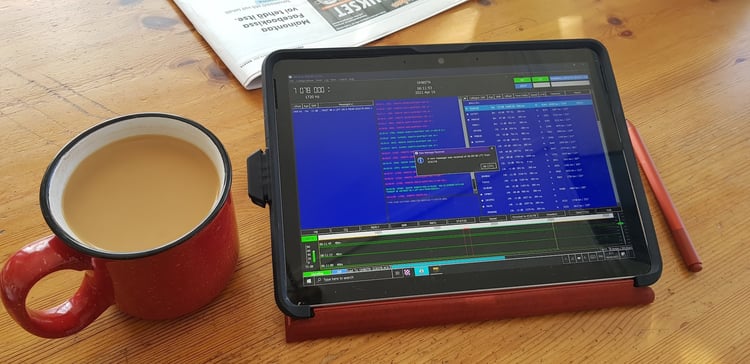
For my own fieldwork, I almost always use a Microsoft Surface Go tablet because it is compact, efficient, and can be charged via USB-C Power Delivery or the Microsoft Surface Connect port on the tablet itself. With a folding keyboard attached, it becomes a small field laptop without the power draw, weight, or bulk of a larger computer. I also use the Dell Latitude 7200 series, which is useful for the same reason: it can be powered directly via USB-C Power Delivery, eliminating the need to use a traditional AC power supply in the field.
That matters because every unnecessary conversion wastes energy. If we use an inverter to convert battery DC to AC, then plug in a laptop power supply that converts that AC back to DC, we have added complexity, heat, and conversion losses to the station. It may work, but it is not the most efficient way to power a logging computer or data-mode tablet from battery storage. In a solar-powered Field Day station, those losses are not just theoretical. They quietly consume battery capacity that could have kept the station on the air longer.
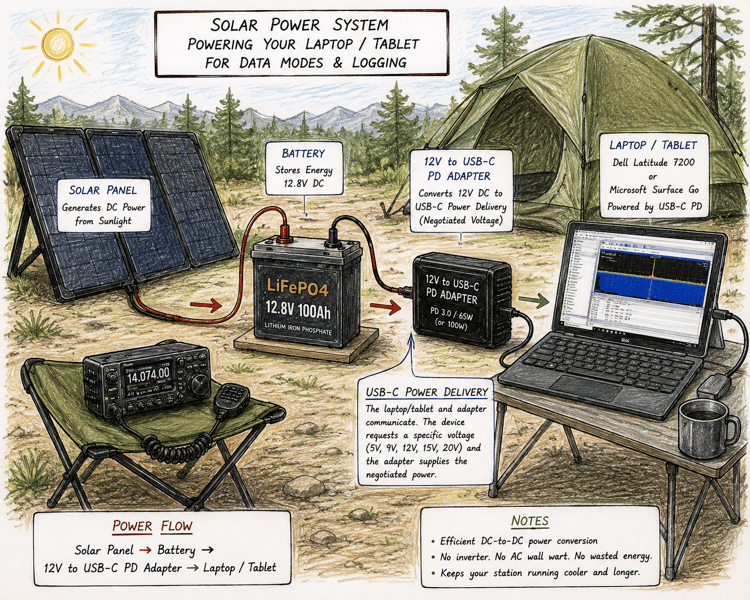
USB-C Power Delivery is also a form of power conversion, but it is a much cleaner and more practical one for this kind of field work. Instead of converting battery power to AC and then back to DC, a 12-volt USB-C PD adapter takes DC power from the station battery. It uses a DC-to-DC conversion stage to provide the voltage requested by the connected device. The laptop or tablet and the USB-C PD adapter communicate with each other, the device requests a supported voltage and power level, and the adapter provides the negotiated output if it is capable of doing so.
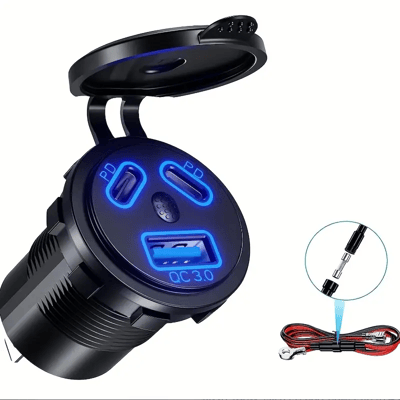
In practical terms, that means the field station needs a USB-C Power Delivery adapter that can run from the station battery voltage and provide the negotiated USB-C output required by the computer. For a 12-volt LiFePO4 station, this usually means using a DC-powered USB-C PD adapter connected to the station’s distribution system rather than relying on an AC wall charger. The result is fewer conversion stages, less wasted energy, less heat, and a cleaner DC-native station architecture.
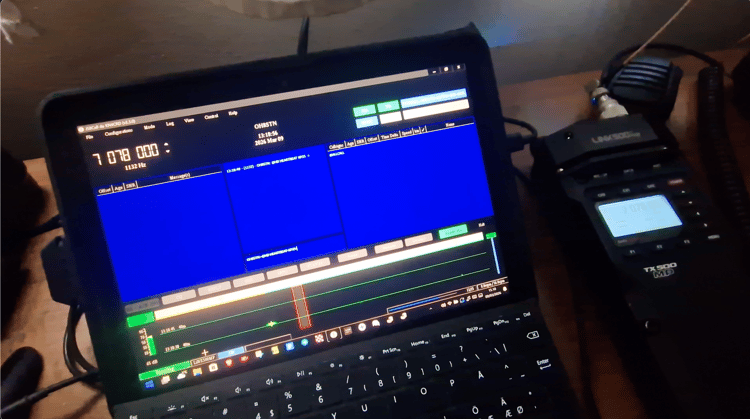
I do not like using laptops or tablets in the field that cannot be powered from USB-C Power Delivery or another direct DC charging method. An inverter and AC power supply can certainly power a computer, but that approach should be treated as a fallback rather than the preferred design. Just as we avoid radios with excessive current consumption when building a sustainable off-grid station, we should avoid using a laptop power system that acts like a small room warmer while quietly draining the battery.
When choosing a computer for data modes and logging, the priorities are straightforward: low power consumption, reliable operation, a readable display, enough performance for the software being used, and the ability to charge efficiently from the station’s DC power system. For a man-portable or lightweight field station, the computer is often there first to support data modes, with logging as a secondary task. In a larger fixed or multi-operator Field Day station, logging may become more prominent, but the power requirement is the same. Whether the computer is a Surface Go, a Dell Latitude, or something else entirely, it should support the power plan rather than undermine it.
Runtime and contingency charging
Runtime and contingency charging need to be understood in two different ways. Field Day is one use case. Real emergency communications is another. The equipment may look similar, but the rules and operating assumptions are not the same.
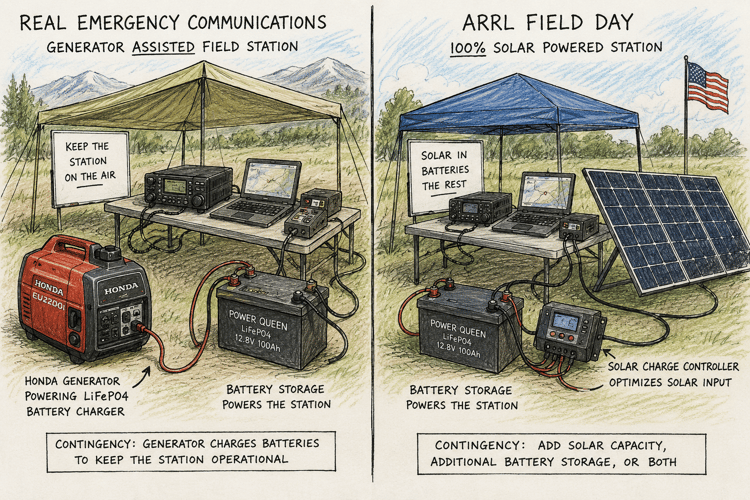
For ARRL Field Day, the cleanest approach is to treat additional solar capacity, additional battery storage, or both, as the primary contingency plan. If the station is intended to operate as a solar-powered field station, then the battery bank and solar array should be sized with enough margin to handle reduced sunlight, higher operating duty cycle, longer receive periods, data-mode use, computers, lighting, and the normal inefficiencies that appear once the station is actually operating in the field. In other words, the contingency plan for Field Day should be built into the solar and battery system before the event begins.
That may mean bringing a larger battery than the minimum calculation suggests, adding another solar panel, using multiple charge controllers, reducing station current consumption, lowering transmit power when possible, or adjusting operating strategy when conditions are not ideal. A cloudy afternoon should not immediately turn into a power emergency. If the station is properly planned, the battery gives us reserve capacity while the solar system works to replace the energy being used.
A real emergency communications deployment is different. In that situation, the goal is not to contest compliance. The goal is to keep the station operational. If weather, terrain, smoke, shade, winter sun angle, or extended operating hours prevent the solar system from keeping up, then using a small, quiet generator to power a proper LiFePO4 battery charger can be a completely practical contingency option. A Honda-style generator feeding a lithium iron phosphate charger is not elegant, but it can keep the station alive when solar alone is not enough.
The same applies to vehicle-supported deployments. A 12-volt DC LiFePO4 charger powered by a vehicle can be useful for topping up a battery storage system when the mission allows. That does not make it appropriate for every Field Day class or scoring goal. Still, in a real emergency communications deployment, vehicle charging may be one of the most practical ways to recover battery capacity when solar conditions are poor.
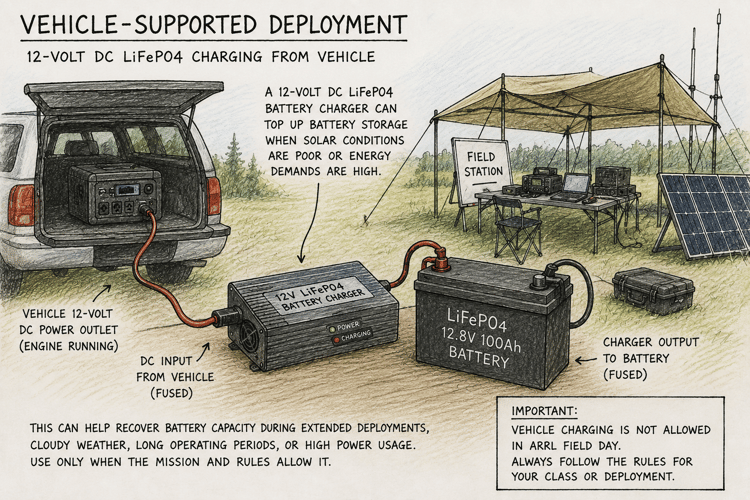
The important point is to define the mission before choosing the contingency method. For Field Day, build the reserve into the solar-and-battery system. For real emergency communications, use the charging method that keeps the station running safely and reliably. Either way, runtime is not something we hope for. It is something we plan, test, and build into the station before the first contact is made.
Field Day Shelter
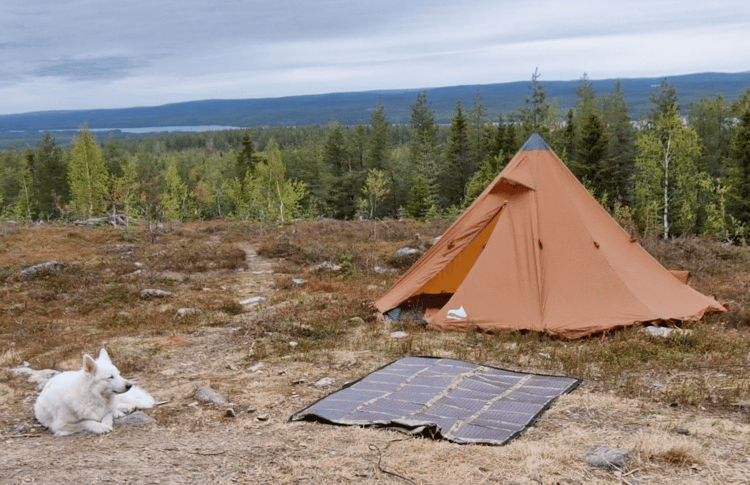
Shelter is another part of the field station that is easy to underestimate until the weather changes, the wind picks up, the temperature drops, or operator fatigue sets in. Just like radios, batteries, solar panels, and antennas, shelter has to match the deployment. A man-portable QRP station, a fixed field station, and a vehicle-supported Field Day station do not have the same shelter requirements, and forcing a single shelter solution across all deployments usually creates more problems than it solves.
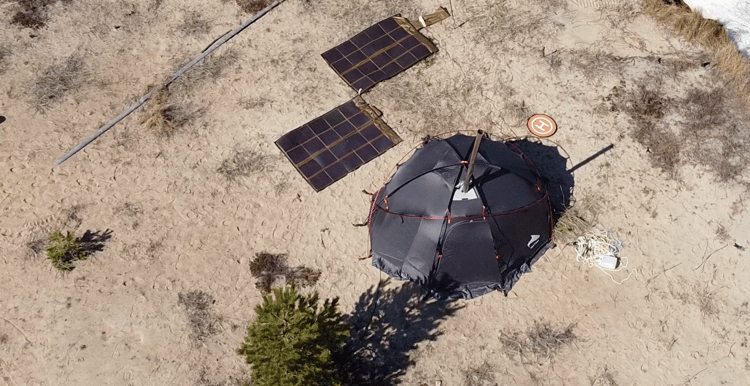
Over the years, I have used a variety of shelters for field radio work, including tipi-style tents, dome tents, caravan-based operating positions, and camper-style setups. These days, for comfort and mobility, I have started leaning more toward hammock-based shelter systems, including a hammock tent with a OneTigris hammock shelter. For the kind of lightweight deployment I often prefer, that combination offers a useful balance between protection, rest, portability, and comfort without adding the weight and bulk of a larger tent system.
For a man-portable deployment, shelter weight matters. We are already carrying radio equipment, computer equipment, solar panels, batteries, antennas, feed line, food, water, tools, and clothing. It is not realistic to assume we can also carry a heavy shelter system and still maintain the mobility that made the station man-portable in the first place. If the Field Day station is vehicle-supported, then a larger shelter, awning, camper, caravan, or tent may make perfect sense. If the station is being moved by human power, the shelter must be light enough to carry, simple enough to deploy, and effective enough to protect the operator and equipment.
Shelter is not only about staying dry. It is about keeping the operator functional. Wind, rain, cold, sun exposure, insects, poor sleep, and an uncomfortable operating position all wear down the operator over time. Whether we are talking about a single operator station or a larger multi-operator Field Day setup, operator fatigue is real. A station can have excellent radios, a solid antenna system, and plenty of battery capacity. Still, if the operator is exhausted, cold, wet, cramped, or unable to rest, station performance will suffer.
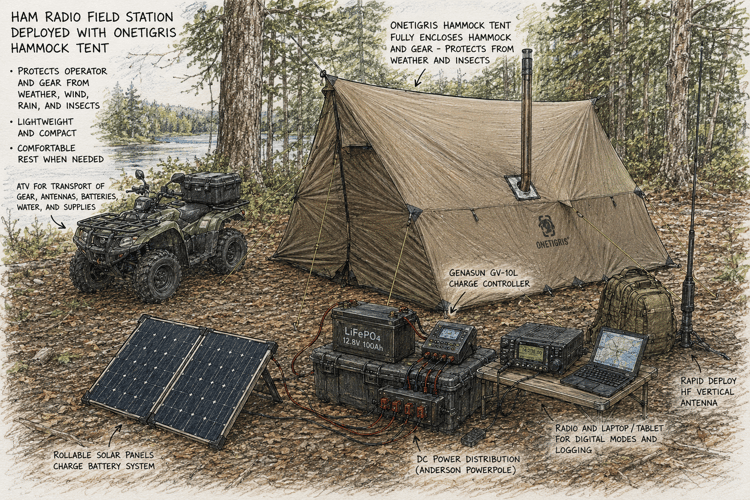
This is one reason I take shelter and rest seriously. A hammock system is not the right answer for every deployment, but for some man-portable and lightweight field stations, it can provide a real advantage. Compared with many dome tents, a hammock and hammock shelter can be lighter, faster to set up in the right terrain, and far more comfortable for rest periods. That matters when the operator only has short windows to recover before returning to the radio.
There is always some young hard charger who can stay up for 24 hours, sleep in a chair, or convince himself that discomfort is part of the mission. I understand that mentality, and I have lived enough of it myself. But for those of us who have been doing fieldwork for decades, operator fatigue has a way of reminding us of old knee and back injuries, cold-weather exposure, and all the little aches and pains collected along the way. Ignoring shelter and rest does not make the station more capable. It just makes the operator less effective.
The shelter should support the mission in the same way the power system supports the station. It should protect the operator, protect the equipment, reduce fatigue, and allow the station to keep working through changing field conditions. For Field Day, emergency communications, or any serious field deployment, shelter is not a luxury item. It is part of the station architecture.
Keep the System Design Simple
After all the talk about radios, solar panels, charge controllers, batteries, power distribution, computers, shelter, and contingency charging, the final point is simple: do not overbuild the station beyond the mission. A Field Day station should be capable, but also understandable, deployable, and manageable under real field conditions. Complexity has a cost. Every extra cable, adapter, power supply, converter, charger, device, and “just in case” item adds weight, setup time, troubleshooting burden, and another possible point of failure.
This matters most for man-portable and smaller fixed field stations because carrying capacity is limited. Those operators cannot carry every spare part in the world, and they usually cannot carry a complete backup station. The hard work has to happen before the deployment, during the planning phase. That is where the operator decides what the station is supposed to do, how long it needs to operate, how much current it will consume, how much solar and battery capacity it needs, what must be carried, and what can be left behind.
The goal is not to build the most elaborate Field Day station possible. The goal is to build a station that supports the operating plan. Use direct DC where possible. Avoid unnecessary DC-to-AC-to-DC conversion. Keep the wiring clean. Fuse the system properly. Use a power layout that is easy to follow when tired. Choose radios, computers, batteries, solar panels, and shelter that match the deployment rather than fighting against it. If something fails in the field, the operator should be able to understand the system well enough to isolate the problem and keep operating.
A well-planned station does not need to be fragile or complicated. It should include the most common spares needed for likely mishaps, such as fuses, power leads, adapters, connectors, and a few small repair items, but it should not become a rolling junk drawer. The more disciplined the planning, the easier the station is to deploy, operate, maintain, and troubleshoot.
That is really the core message of this entire article. Define the mission. Build the power system around the station load. Choose efficient radios and computers. Use solar and battery storage as a single working system. Keep the power path simple. Protect the operator and the equipment with a practical shelter. Bring the spares that actually matter. Above all, make the station something you can deploy with confidence and enjoy operating.
Field Day should test the station, but it should also be fun. When the power system works, the radio is efficient, the computer is charged, the operator is protected, and the station stays on the air, there is a real sense of pride in knowing the system came together because it was planned well. That is the point. Build it simply, build it thoughtfully, and let the station shine.
73 de Julian OH8STN
Take this blog post with you!

.jpg)